|
–Geoff-Hart.com:–Editing, Writing, and Translation —Home —Services —Books —Articles —Resources —Fiction —Contact me —Français |
You are here: Home (fiction) --> Channel Islands --> May 7: Jersey Island
Vous êtes ici : Accueil (fiction) --> Channel Islands --> May 7: Jersey Island
Correction: In yesterday's installment, 29 hours was how long we'd been awake by the time we reached St. Helier; it was actually only 19 hours of travel according to Shoshanna's recalculation. Oh well... that's all right then!
Last night's dinner was at Café "JAC", which we discovered is an acronym for Jersey Arts Centre. JAC provides a coffee shop and full restaurant for theatregoers (in the "arts" part of the building), with enough variety on the menu to fill several different meals. It's small and cozy, with about a dosen tables plus some outdoor seating, though it was too cold for our taste and we chose to eat indoors. Shoshanna had a vegetarian chile with squash, black beans, and tomato sauce, and I had a Goan coconut/beef curry with amazing raita. Shared, of course. Neither was particularly spicy, but both were savory and delicious. Washed down by a nice not-too-bitter draft IPA from Camden Brewery, and finished with a salted caramel–espresso sauce/vanilla ice cream affogato.
We're planning to return for at least one more meal. Probably on Saturday the 9th, since JAC is a significant distance from the restaurants that surround Liberation Square, where locals will be celebrating the 61st anniversary of the liberation of the Channel Islands from the Nazis. Earlier, we'd dropped in at the visitor information centre to collect information on local hikes, and the guy who was staffing the info booth told us the city typically expects ten thousand visitors on this day (versus a normal population of about 36,000. [Update: a local friend of Shoshanna thought that sounded too high.] Without a reservation, forget about finding a place to eat. We expect we'll go downtown to check out the festivities. We'll also seriously consider buying sandwiches for our host's fridge, since I expect food supplies to dry up quickly.
Just as we were settling into our room, post-dinner, we heard a knock on the door, and lo! and behold, it was Shoshanna's strayed backpack. We always pack a couple days of underwear in our carry-on baggage, and sometimes it's a good thing.
Next morning, we met Shoshanna's Internet-friend who goes by the name "Trepkos" at JAC for a nice chat to get to know each other. Successful enough that we'll be meeting her and her partner on Sunday to get better acquainted and see some of their favorite spots around the east end of the island. Details in a couple days!
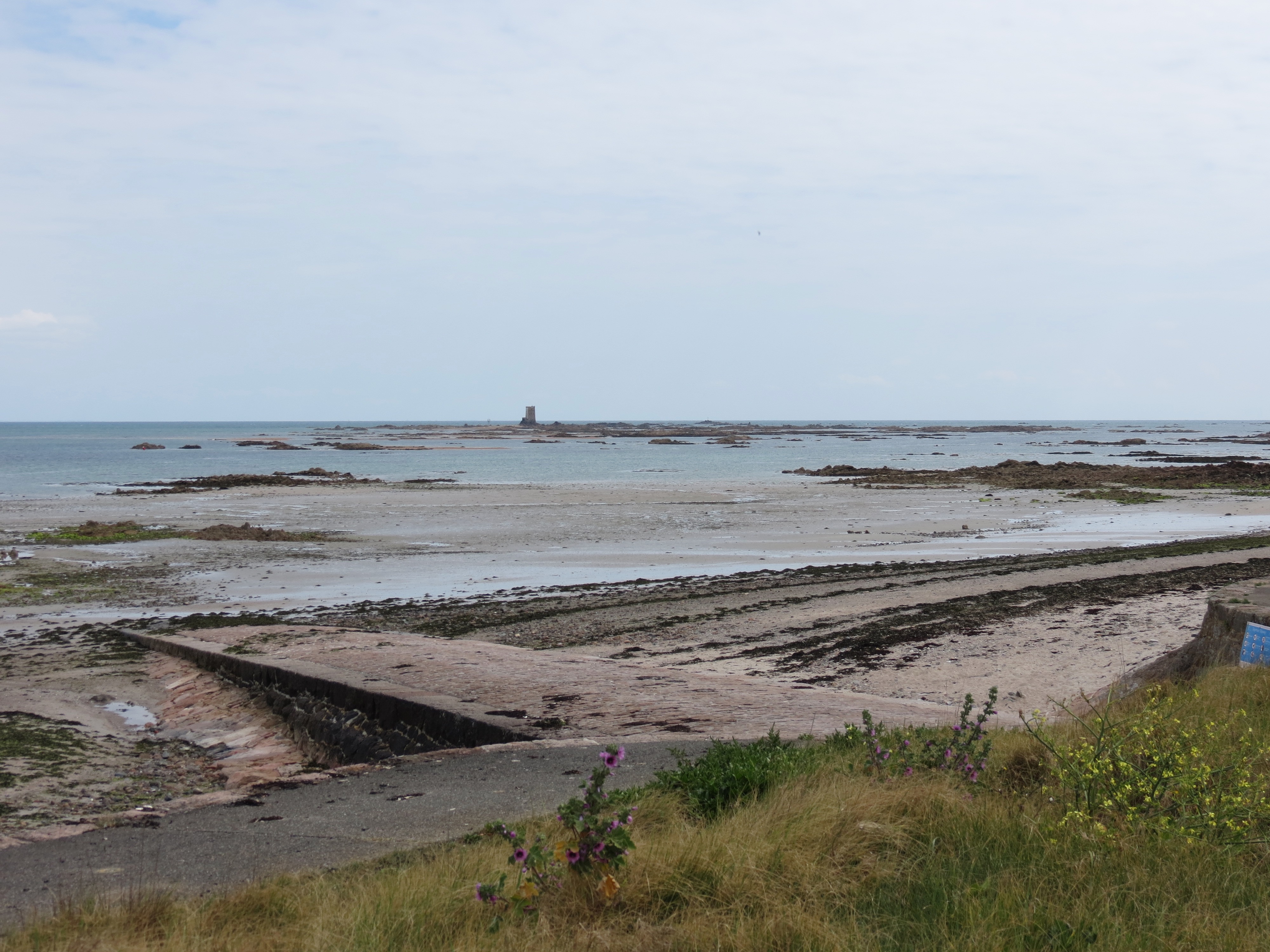
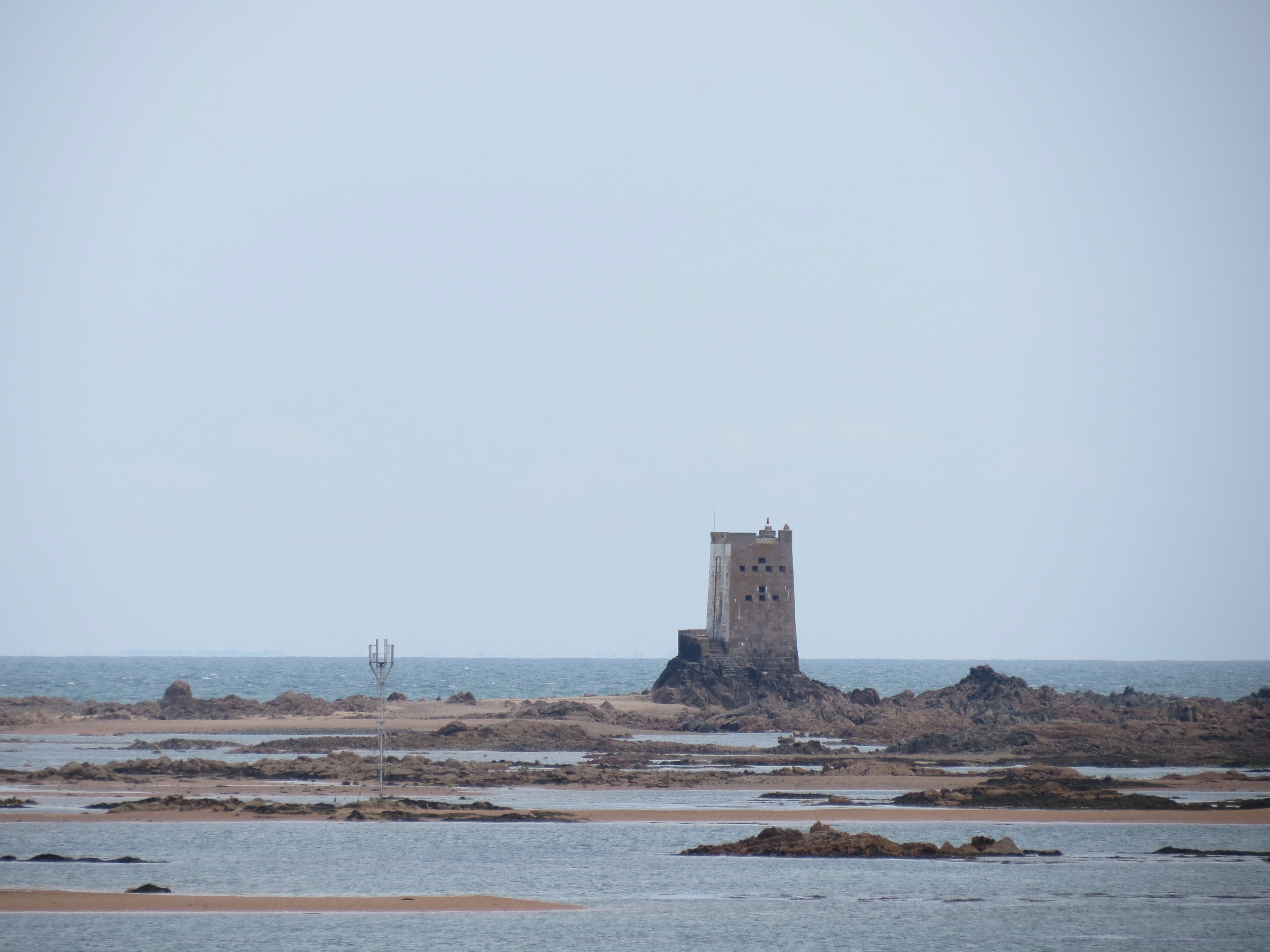
Today's plan was to do the Seymour Tower seabed walk from 3 to 6 PM, when the sea was at low tide. If you scuba dive or snorkel, you know that a lot of topography lies under the waves. We took a bus up the coast for about 20 minutes, watching the innumerable rock outcrops that rose above the surface—outcrops that would be buried for about half the day under up to 12 m (nearly 40 feet) of water at maximum tide.The road was heavily built up, with few to no significant green space like lawns or parks, although there were many stretches where we could watch the sea. We arrived about an hour early, since we didn't want to arrive late and miss the tour, so we had time to grab a snack of fried sweet potato from the cleverly located Seymour Pub, which sits across the road from the path down to the beach.
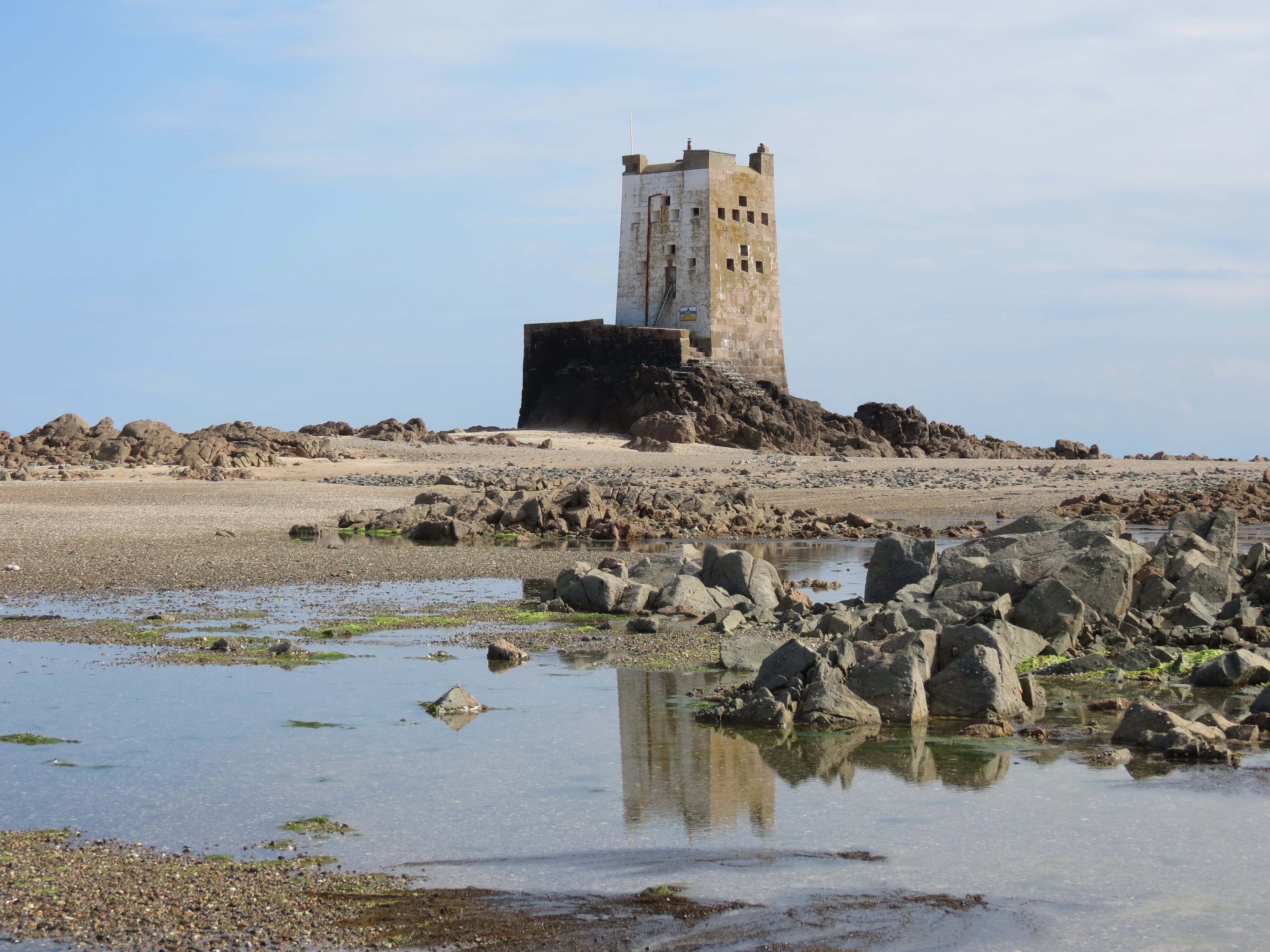
Seymour Castle at low tide (i.e., how far we walked):
Closer view of the castle:
Looking back whence we came:
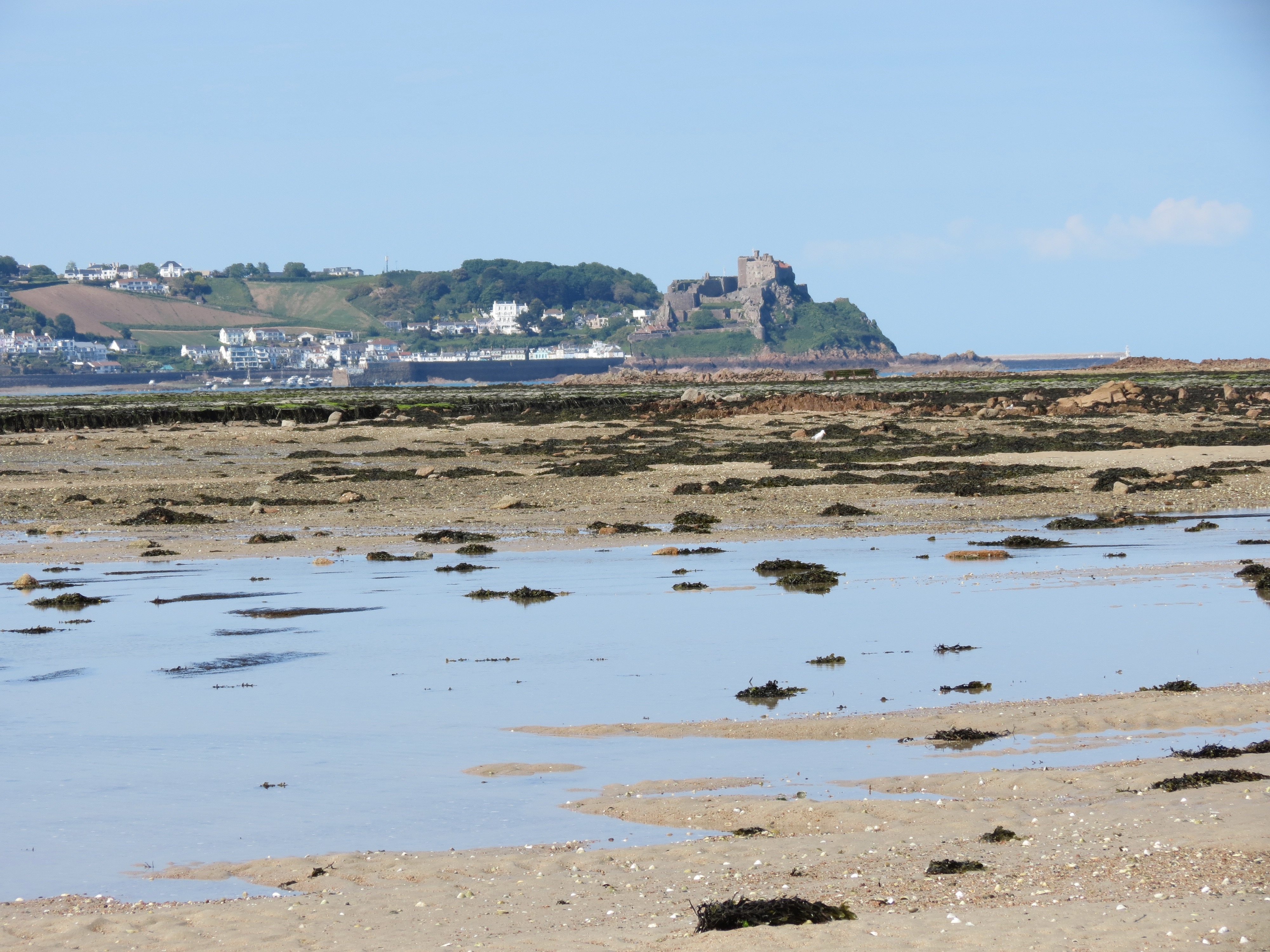
This area has some of the steepest tidal gradients in the world, so it's particularly dramatic when the sea goes out to play hookie. When it does return, it comes back fast because of the shallow slope of the near-shore coast. Fast enough that up to 35 hikers get stranded each year. There's a rescue tower about halfway to the old stone Seymour Tower that rises about 12 m above the seabed to provide something to cling to if you're caught by the incoming ride, but in a really high tide, you'd still be partially submerged until someone notifies the coast guard to come and get you. There's apparently no charge for the rescue service, other than perhaps polite mockery.
Our guide was Trudy, a woman of about our age who clearly loved her work and had thoroughly mastered all aspects of the undersea environment at low tide. She reminded me a lot of Shoshanna's stepmom Micky, though Micky's expertise is forest, not sea. I imagine the two of them would have a blast showing each other their favorite ecosystems.
One thing that fascinated me was how much the sea floor resembled a desert, complete with mesas and other rock outcroppings: seemingly barren until you look close, then suddenly a surprising amount of living things, all of which blossom after the water returns, like a desert after the rain. And, of course, there are temporary river channels, though in this case they're slightly deeper areas that are scoured out by the tide to produce micro-valleys.
Tidal pool with bedrock:
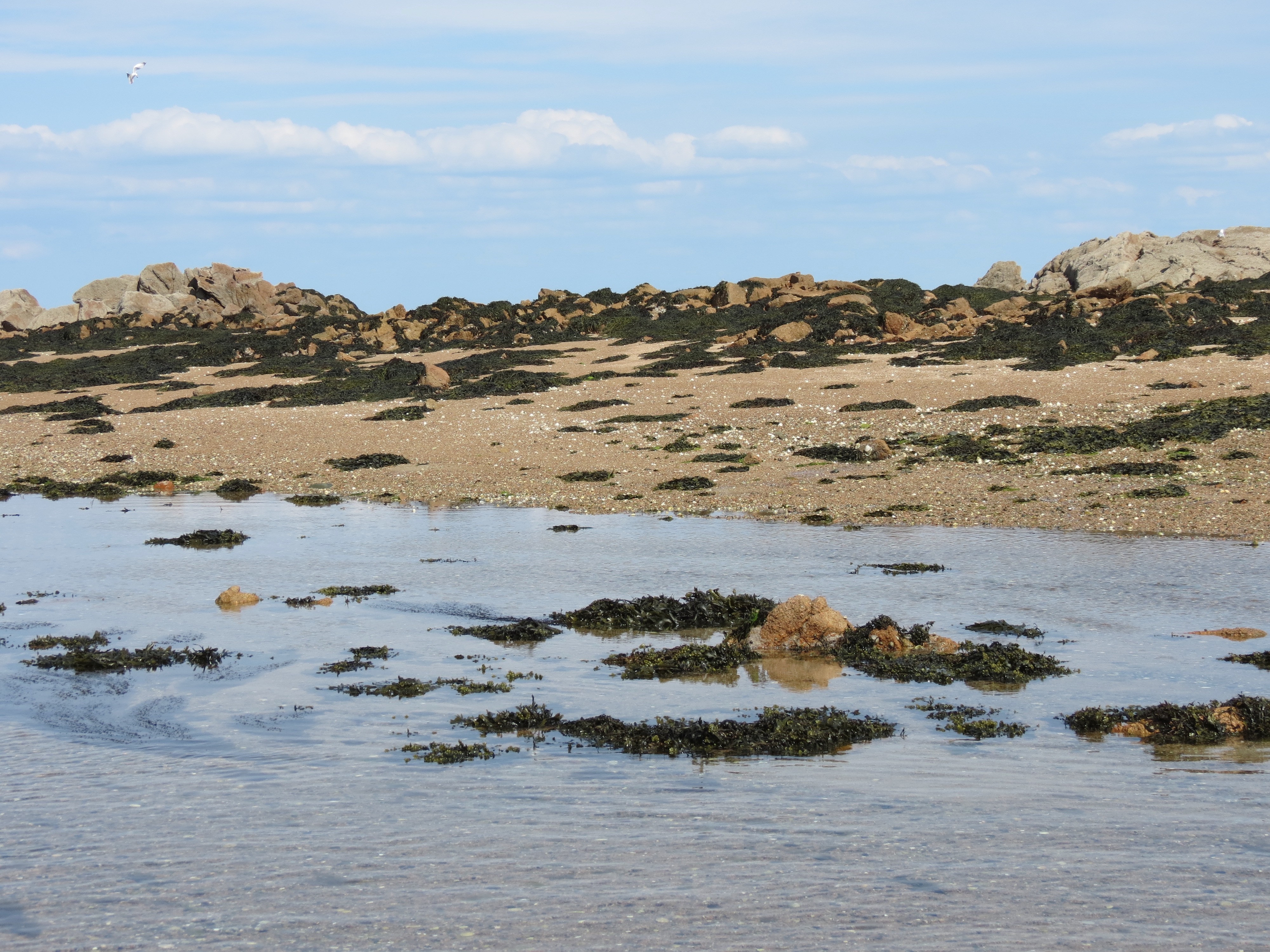
Trudy led us on a 3-hour walk over rock, gravel, and sand areas, pausing frequently to pluck something from the seabed or a rock so she could explain it to us. Many shells (oysters, limpets, razor clams, etc.), a few teeny baby crabs, and a few small fish trapped in tidal pools. One of the people on the tour mentioned that we had walked 5 km going out and hadn't yet reached the tower, so we probably walked 12 km or so by the end of the trip. One fun blast from the past was that we all wore "wellies" = wellingtons = rubber boots. It's probably been 60 years since I last wore rubber boots, and it was surprisingly fun stomping around in wellies for 3 hours. Particularly when the water rose to mid-calf and the boots began trying to float.
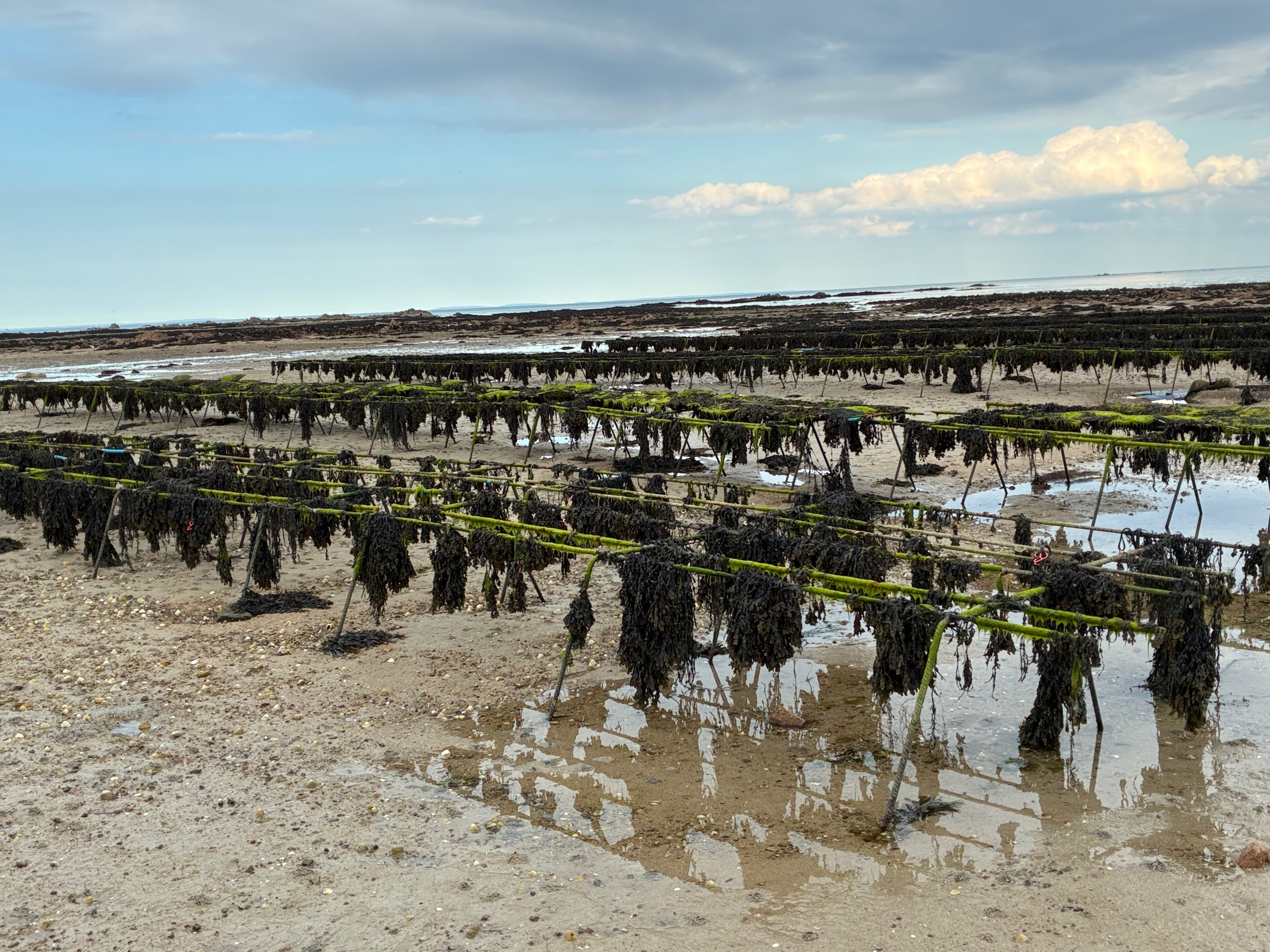
Trudy's explanations included descriptions of the Neolithic peoples who colonized the area post-glaciation, when the seabed area was raised above the sea by the formation of glaciers near the pole that took away much water and lowered the sea. At the other extreme, she told usabout modern efforts to grow oysters in specialized racks that emerge from the retreating water during each low tide before being submerged again. One cool thing was her claim that pretty much all seaweed was edible, though not all is tasty, and is suitable for feeding livestock and fertilizing fields. Lots of interesting stuff about local customs and fishing and living off the bounty of the sea. The local oyster farmers can get a crop in about 2 years. If I'm remembering correctly, they harvest 1000 kg annually just in the small area we visited.
Seymour tower reflection:
Racks used for cultivating oysters:
A long walk back to the car where we'd left our boots. We caught the the next bus and headed back to St. Helier. The weather had been perfect most of the day: sun for most of the day, with clear enough air we could see the coast of France some (20 km?) across the English Channel, but by the time we reached home, the clouds threatened. But it didn't rain until we got back to St. Helier and sat down to dinner at The Square, a nice if pricey restaurant that faces on Liberation Square, where the festivities will be held on Saturday. Shoshanna had pulled pork with beans and corn and salad accompanied by a glass of Nero d'Avola wine; I had barbequed short ribs with really good fries accompanied by Asahi beer. I would have preferred to try some of the local beers by the Liberation Brewing Company, but they were all in small bottles, so no way to try them first to see whether we liked them. Asahi's a decent Japanese beer, but we're hoping to try more of them in coming days.
Pictures hopefully tomorrow!
©2004–2026 Geoffrey Hart. All rights reserved.